Above-Ground Oil Storage: China Risk Series
Share article



Geoffrey Craig, Senior Product Strategist
This article is the second in a series that explores how satellite-based analytics can effectively monitor China’s energy sector for signs of military preparations.
Across China, thousands of oil storage tanks play a crucial logistical role, ensuring the continuous operation of the country's vast refining industry. These tanks help produce sufficient fuel and feedstock to keep the economy running smoothly.
Crude oil inventory levels can provide insights into the country’s oil market and, by extension, its economy.
As highlighted in our last article, the focus on China’s economy also serves another purpose: it may reveal insights into the state of its military preparedness.
Warfare requires a massive amount of energy, so a country may stockpile resources in advance, particularly if it is import-dependent, like China with oil, and fears a blockade or embargo.
At a recent Congressional hearing on this topic, one expert witness informed the committee that increases in China’s crude oil storage utilization rate could serve as a warning signal.
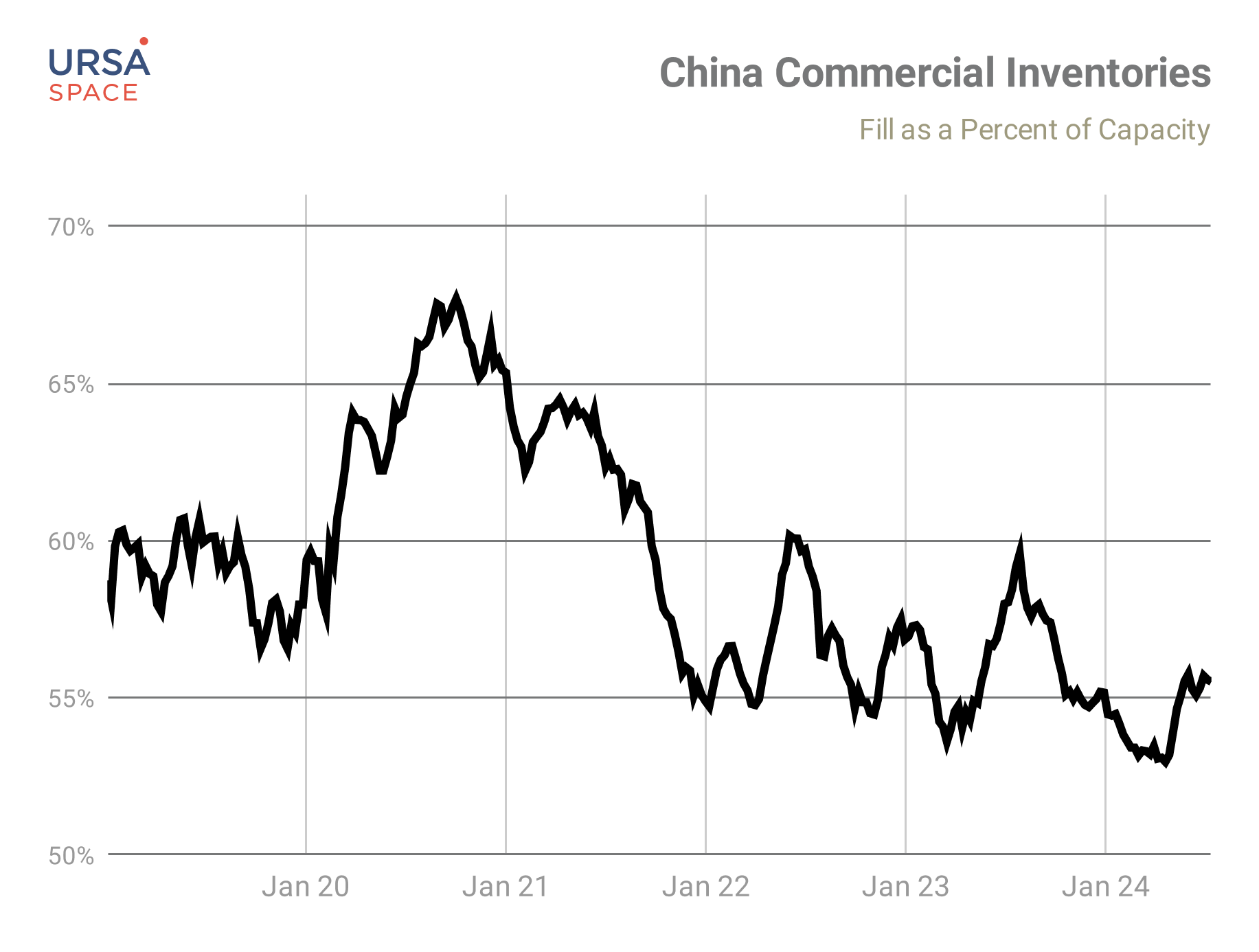
How high would inventories have to rise to warrant attention? Historical data provides the necessary perspective. The measurements below, based on radar satellite imagery, come from Ursa Space.
So far in 2024, inventories have been relatively low by historical standards, staying below the three-year and five-year averages for the same period.
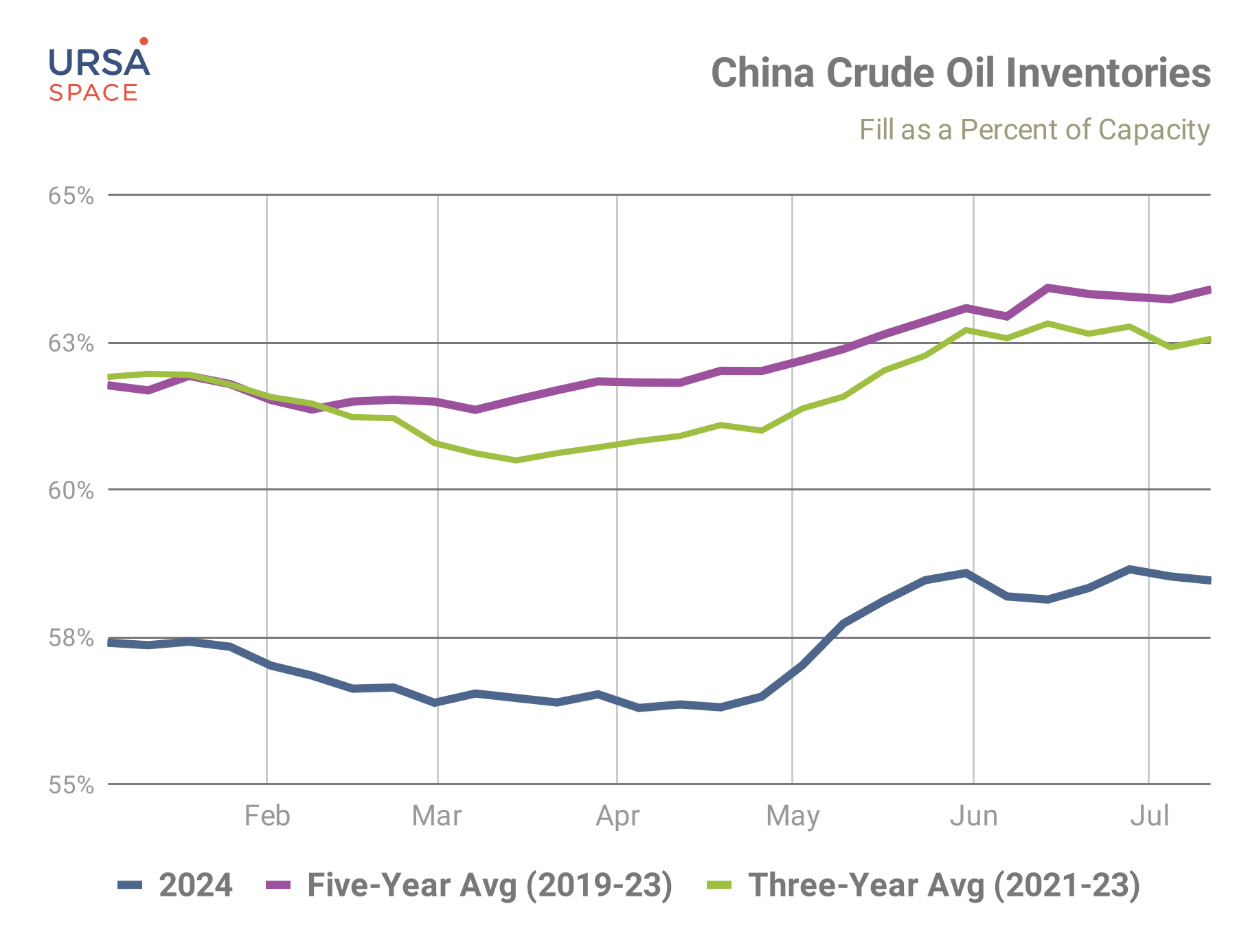
However, keep in mind that the five-year and three-year averages were skewed by the unprecedented inventory builds that occurred in 2020-21 due to pandemic-era travel restrictions.
Inventory utilization rates approached 70% in Q4 2020 and did not return below 65% until mid-2020, which stands out as an outlier in the recent past.
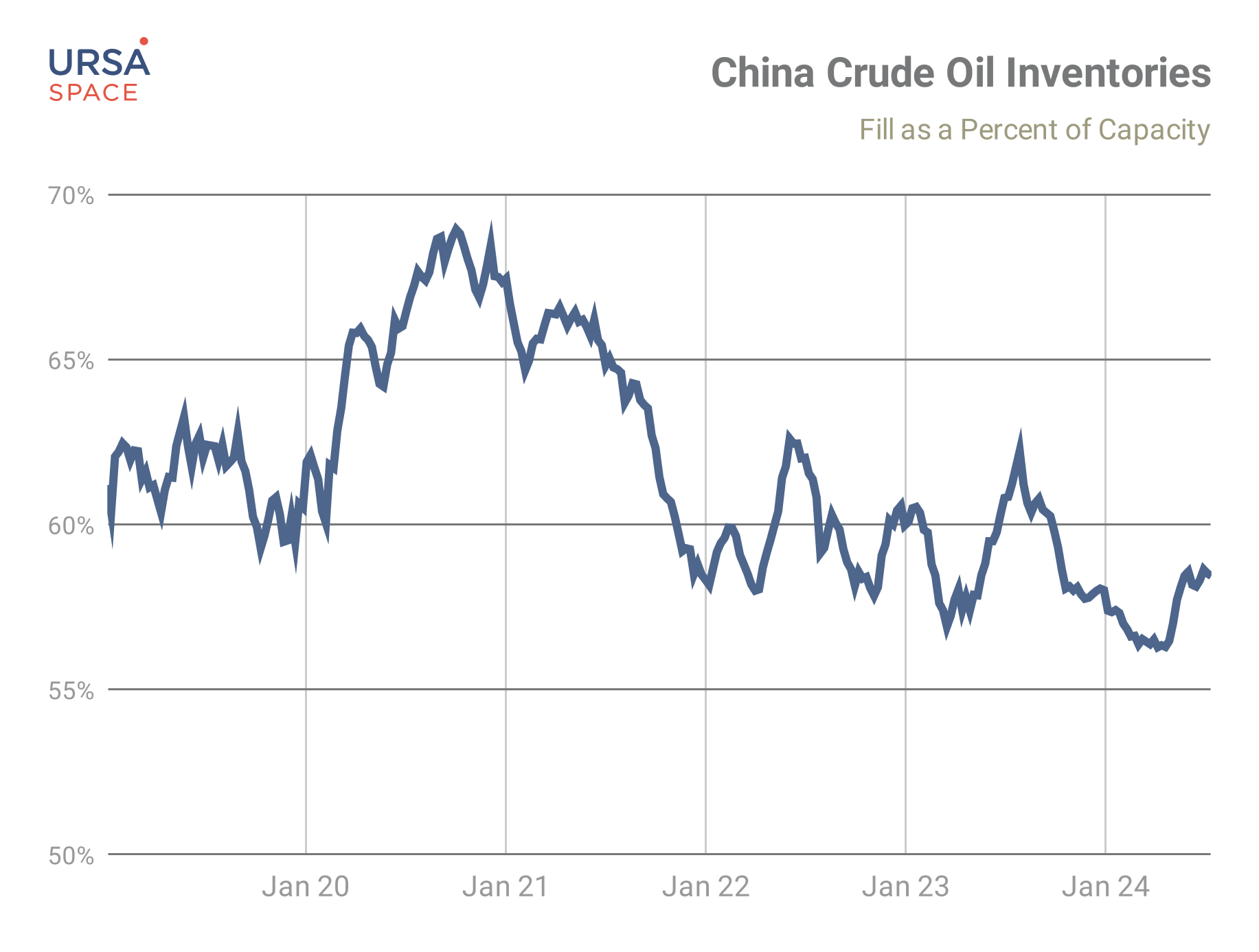
If you exclude the COVID-impacted years (2020-21), a reasonable upper limit that would trigger alarm bells appears to be around 65%. This level has not been reached since 2019, if not longer.
The only caveat is ensuring that no event similar to COVID is behind a dramatic increase in inventories. Otherwise, it’s safe to assume that the root cause is China’s decision to stockpile for energy security, possibly as a precursor to military activity.
Some added context may help make this point. For starters, the Chinese government, deeply concerned about its vulnerability due to import dependence on oil, has prioritized maintaining large oil inventories.
This mindset also informed the decision to build a Strategic Petroleum Reserve (SPR), which includes both above-ground storage tanks and underground facilities.
Ursa Space data shows that SPR above-ground tanks have been close to full since 2019 without exception. Maximum capacity is generally considered to be 80%.
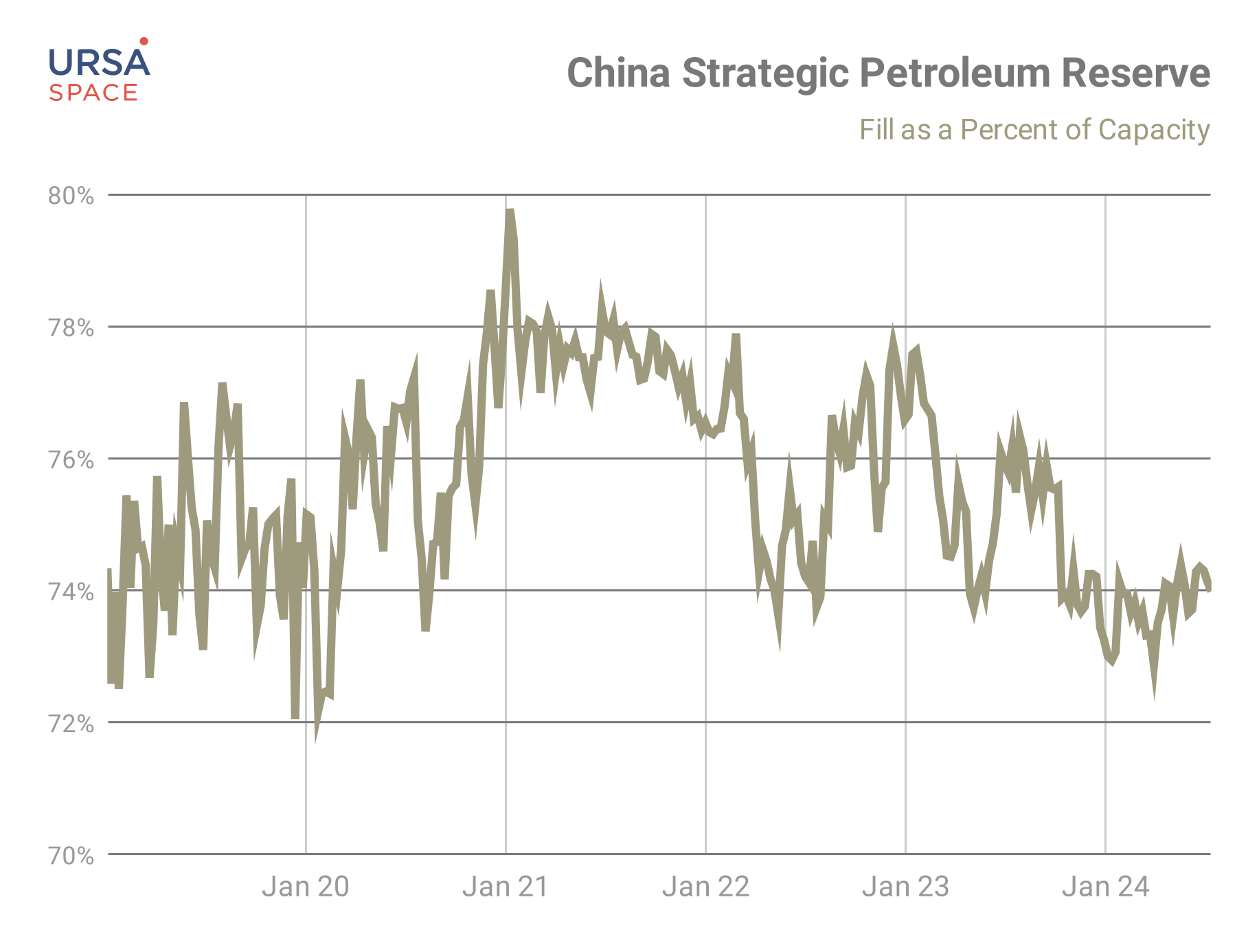
There isn’t much headroom left for additional barrels in SPR-designated above-ground tanks.
The other options are underground storage (to be discussed in a future article) and “commercial” above-ground tanks, which make up a much larger share of the total capacity compared to those designated as part of the SPR.
At current levels, assuming an 80% maximum capacity, this means commercial tanks could accommodate approximately another 370 million barrels.
Judging by the name, it may seem that “commercial” tanks fall outside the scope of this discussion, if their management is more influenced by economic considerations than by government policy directives.
However, as noted by others, the distinction between commercial and strategic stocks in China has been ambiguous from the beginning, unlike in the United States and other OECD countries.
After all, China's oil industry is characterized by significant government involvement, with state-owned enterprises playing a dominant role.
By filtering the commercial tanks by owner and focusing on the large state-owned companies (e.g., Sinopec and PetroChina), it’s possible to gain a clearer picture of stockpiling activities.
Additionally, there are independent refiners located in Shandong Province, with the largest storage location in that province found in Weifang (see map below).
The majority of China’s above-ground storage tanks are located along the coast, aligning with major ports and centers of population and industrial activity.
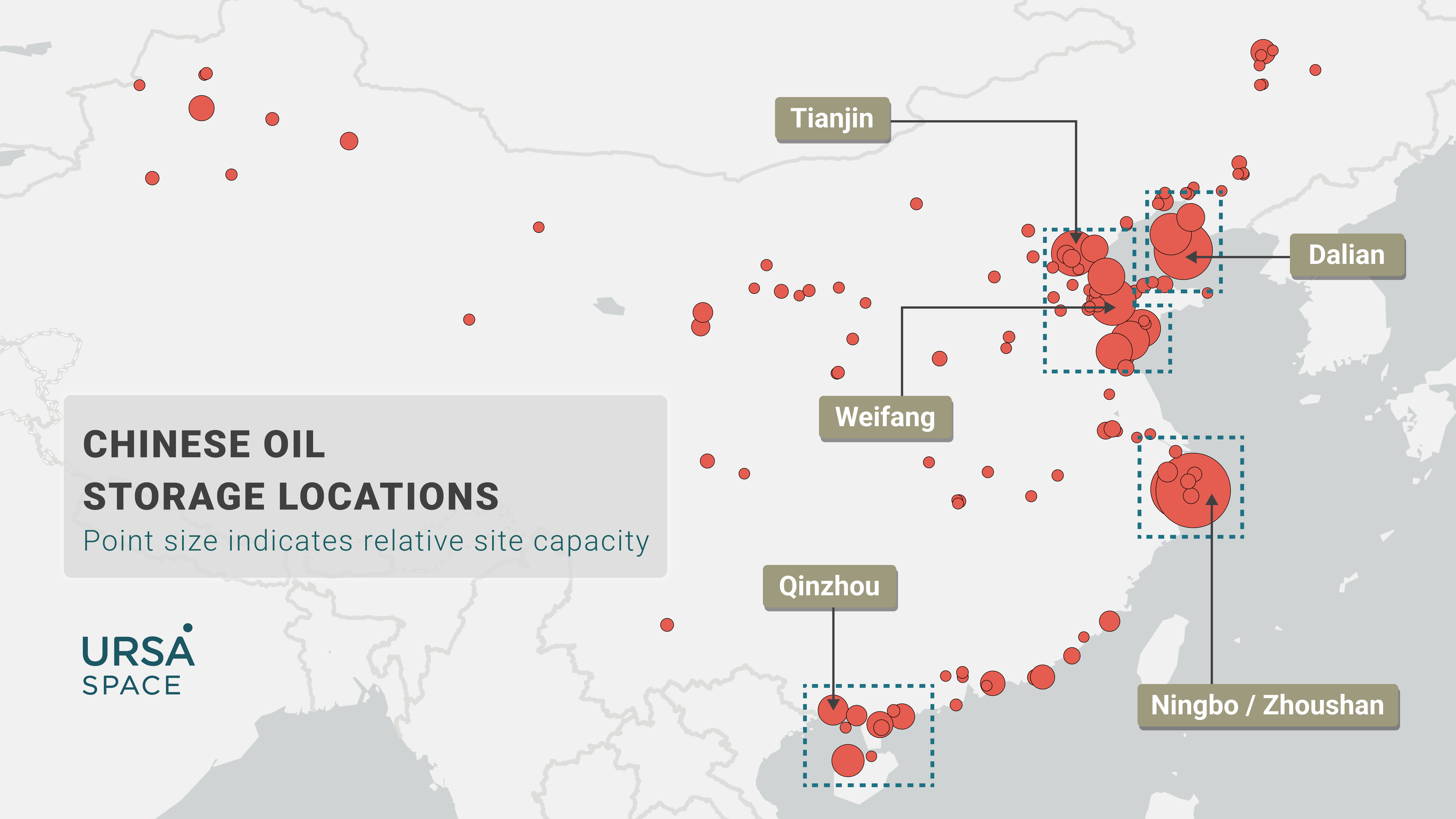
There are several clusters to mention. In the industrial northeast, centered around the rim of Bohai Bay, you find cities like Dalian and Tianjin. Further south, there is the world's largest port, Ningbo-Zhoushan, located across Hangzhou Bay from Shanghai. In the south, Qinzhou is part of a significant manufacturing hub.
Ursa Space’s China coverage includes more than 4,000 floating-top roof tanks across nearly 130 locations, with a total capacity of 1.9 billion barrels, as part of our Global Oil Inventories product.
In our next article, we will describe an effective method to monitor another warning signal related to China’s energy sector: the construction of new overland oil pipelines and the expansion of existing ones.
Share article
