Coal Production: China Risk Series
Share article





Geoffrey Craig, Senior Product Strategist
This article is the fifth in a series that explores how satellite-based analytics can effectively monitor China’s energy sector for signs of military preparations.
China is not only the world’s largest coal producer, but also its biggest consumer. Although coal's share in China’s energy mix has declined, its overall consumption continues to grow.
As a fuel source, coal remains unmatched, making it a strategically vital resource whose importance cannot be overlooked in the broader geopolitical context.
In this series, we’ve discussed the vast amount of energy required to sustain warfare, which may prompt nations to take certain steps to bolster reserves in advance.
Previously, we outlined how China would likely increase its crude oil inventories, primarily through higher imports, as a precursor to any military action.
Similarly, coal is also crucial to China’s economy, though stockpiling reserves would likely be driven by domestic production, according to Gabriel Collins, a fellow at Rice University’s Baker Institute.
Collins was among a group of experts who testified at a Congressional hearing on economic indicators in China that could signal preparations for conflict.
“China’s rich domestic coal reserves allow it to throttle production up in response to energy supply shortfalls, as it did with an approximately 25% production increase between early 2021 and early 2023,” Collins wrote in prepared remarks.
“Such strategically transformational expansions of energy production are rare in the modern world,” he added.
Since 2017, China has experienced a significant turnaround in coal production, reversing a previous decline and entering a period of strong growth. Production reached record highs in 2021, 2022, and 2023.
Importantly, production levels have consistently remained higher than consumption, allowing China to avoid relying on imports to meet demand.
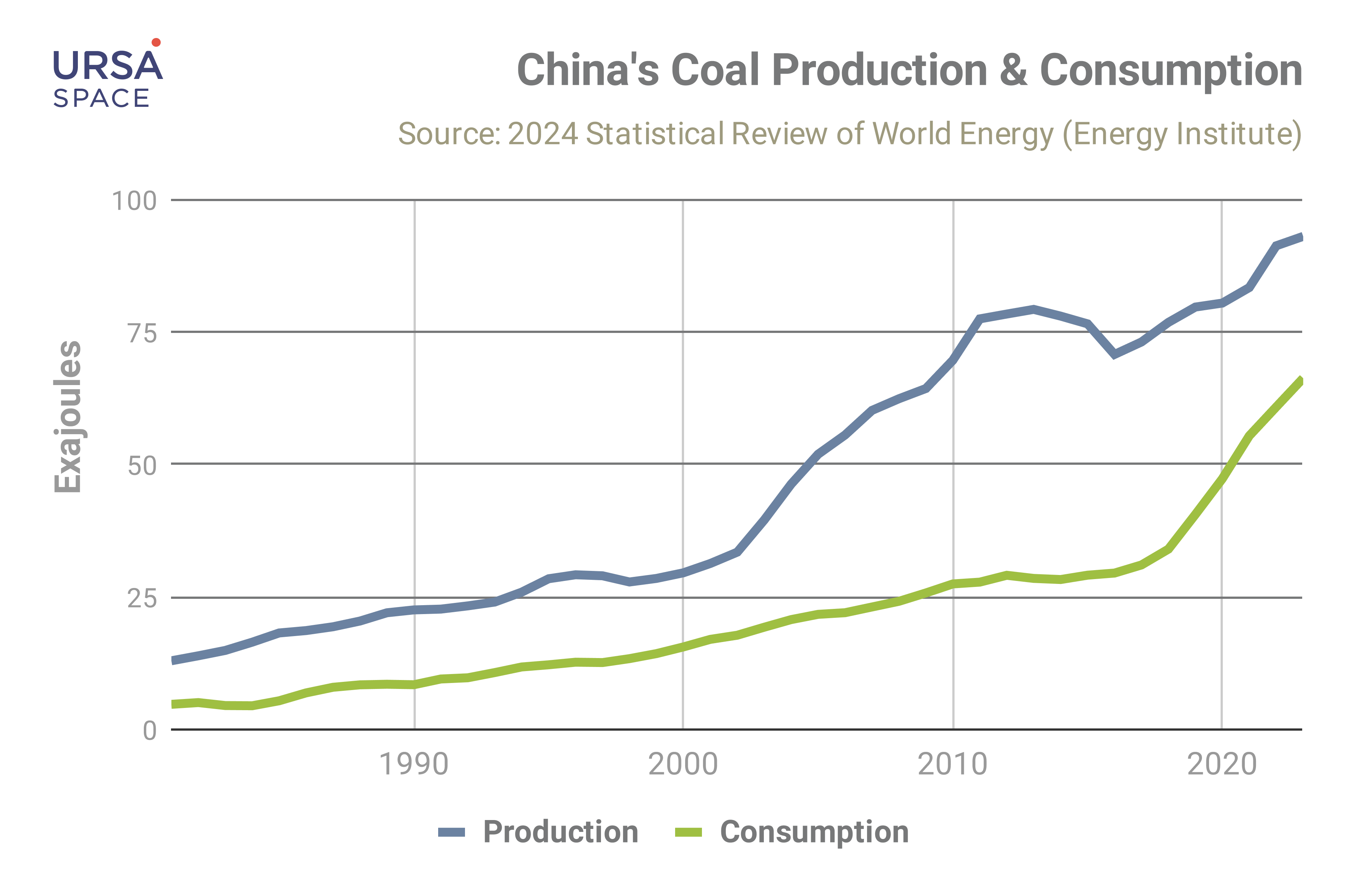
Between 2018 and 2023, annual coal consumption rose by an average of 13.5%, marking an unprecedented period of growth compared to previous years dating back to 1981.
As a net producer, China's situation with coal contrasts sharply with crude oil. The country imports approximately 2.6 barrels of crude oil for every barrel produced domestically.
Expansion Plans
We haven’t seen the end of this coal production surge either, Collins warned.
The “predicate steps are already underway” to further increase production, he said, referring to approved plans to expand coal mine capacity.
How can you monitor activity at China’s coal mines to know whether Beijing is fulfilling its pledge to ramp up production?
To begin with, it's useful to understand more about coal production in China. While coal mining is spread across the country, the vast majority of production is concentrated in the northern and northwestern regions.
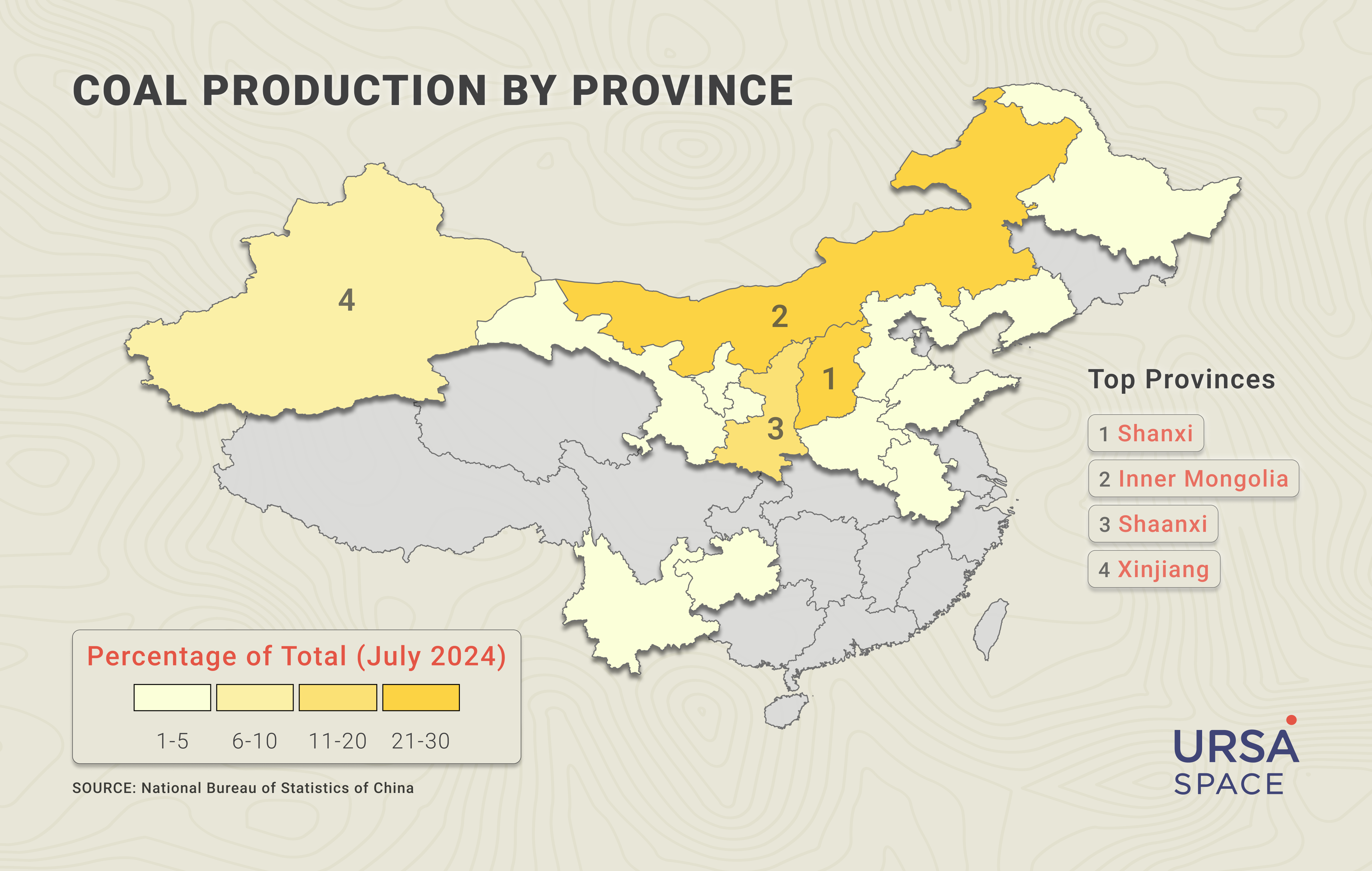
The top provinces are Shanxi and Inner Mongolia, followed by Shaanxi and Xinjiang.
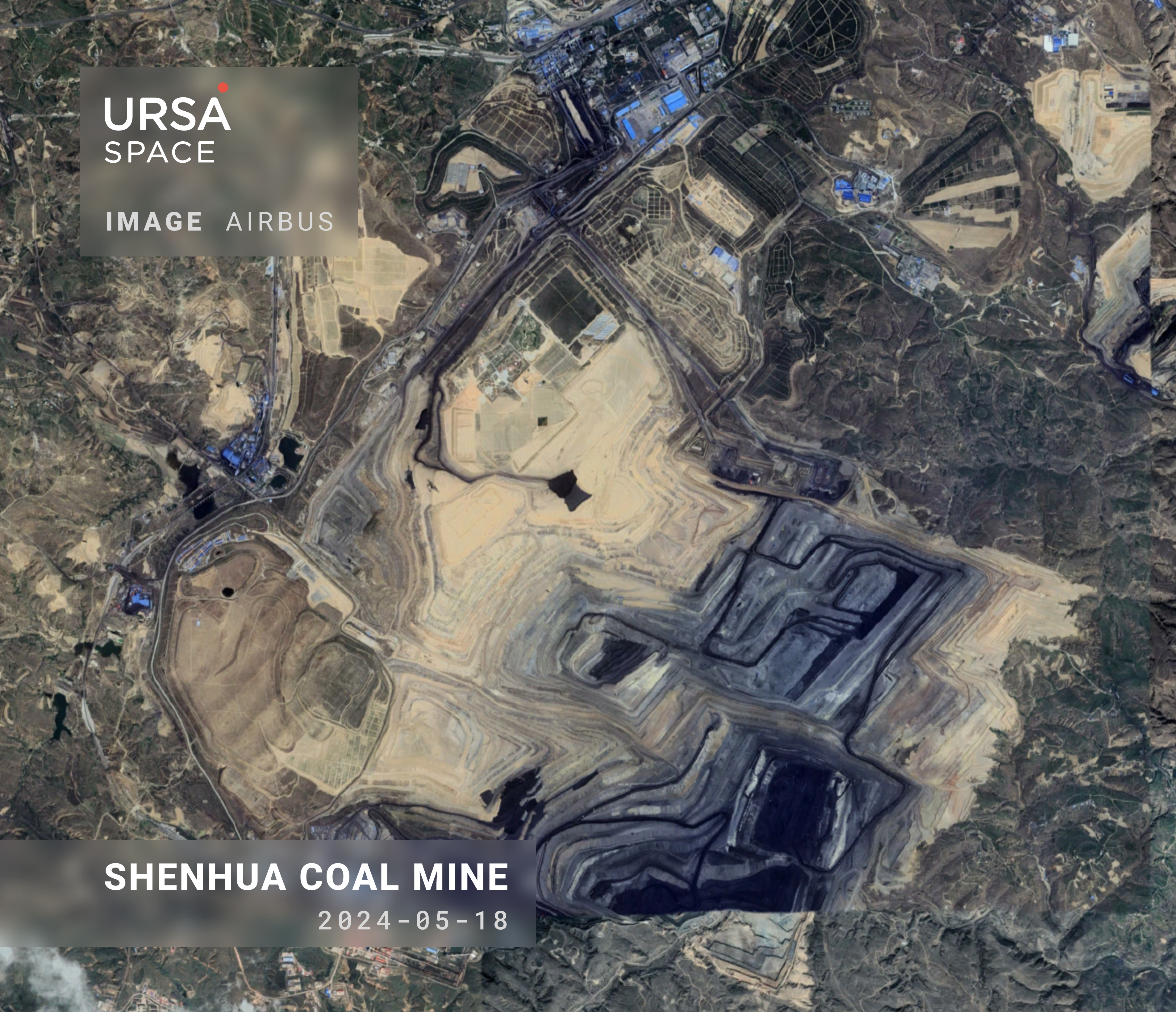
While underground mines account for most of the production, surface mines—like the one shown below —also play a significant role in China’s coal industry.
To expand capacity at a mine would entail significant investment.
Several indicators could signal an increase in mining operations, including a greater presence of heavy machinery and service vehicles, expanded stockpiles in storage areas, the construction of rail loading facilities, and the development or upgrading of roads.
These changes are all visible in satellite imagery, making it a valuable asset to independently monitor what’s happening on the ground.
For example, an increase in the size of coal stockpiles near the mine suggests that more coal is being extracted and temporarily stored.
These stockpiles can be measured using advanced radar satellite imagery, a technique Ursa Space has already employed for iron ore. This method can be similarly applied to monitor coal stockpiles.
Signs of mine capacity expansions would indicate efforts to ensure additional coal reserves are readily available.
Another way to bolster supply is through increased imports. China, one of the world’s top coal importers, purchases coal from overseas for reasons related to quality, cost-efficiency, or to supplement domestic supply during peak demand.
In our next article, we’ll explore how to track China’s commodity imports for signs of unusual activity.
Share article
