OPEC + Production Boost Adds to Oversupply Fears
Share article



With more supply set to hit the oil market this year, will demand be enough to absorb the excess? If not, crude inventories will rise, likely putting further downward pressure on prices.
A decline in oil prices would have significant implications, easing fuel costs for drivers and helping to curb inflationary pressures.
However, if prices fall too low, producers may cut output due to financial disincentives, potentially setting the stage for a sharp price rebound in the future.
Oil prices were already under pressure amid global economic uncertainty. Then, in early March, OPEC and its allies announced plans to increase oil production starting in April 2025, reversing a series of voluntary cuts intended to tighten market conditions.
Since OPEC+ first agreed to production cuts in late 2022, the strategy has effectively reduced inventories, according to Ursa Space data. While levels have fluctuated, the overall trend has been downward.
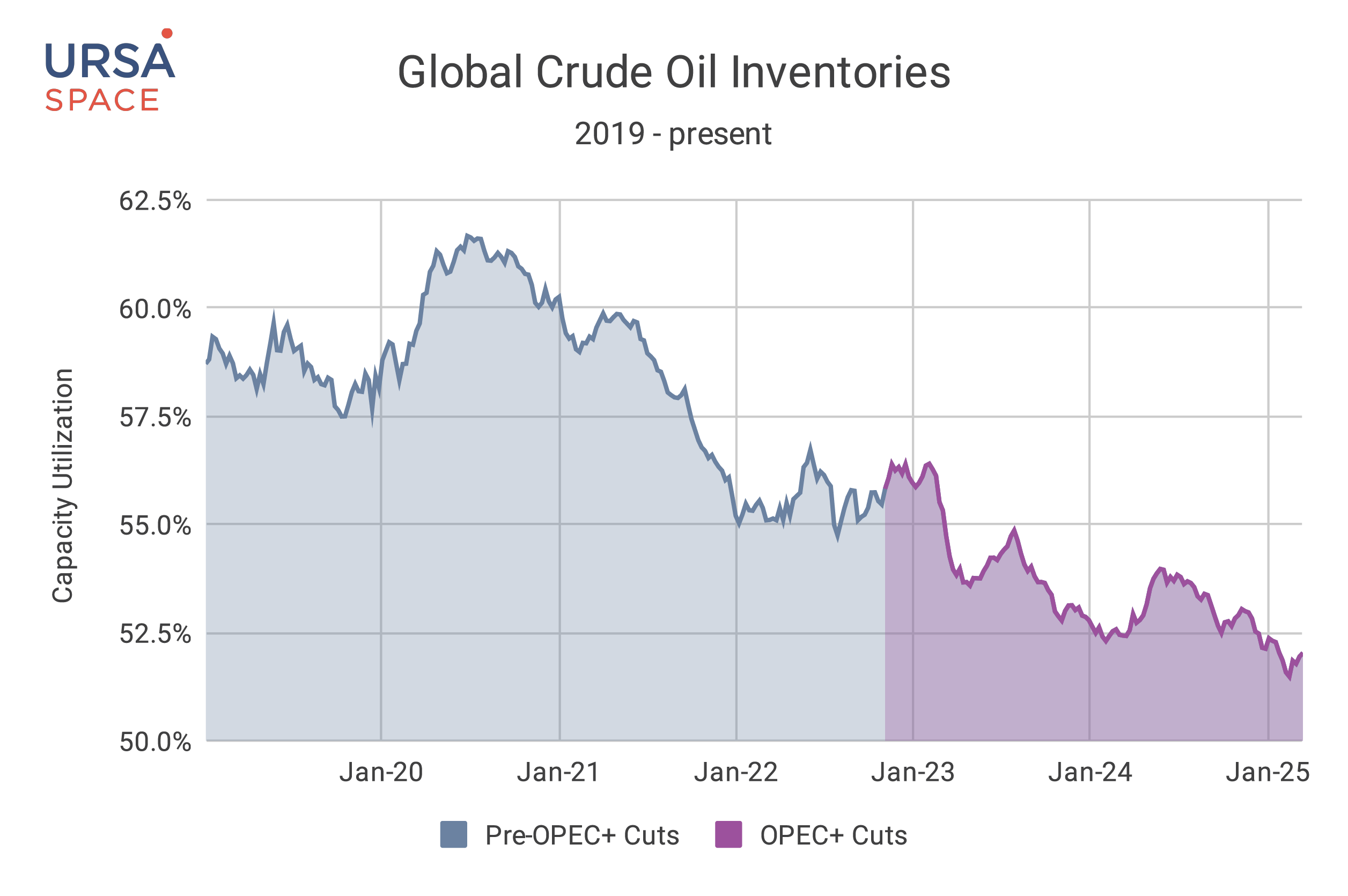
This downward trend is evident in both OECD and non-OECD countries, except in China, where inventories have actually increased.
The graph below shows weekly inventories relative to levels when OPEC+ cuts first began in late 2022. While inventories in OPEC and non-OECD countries (excluding China) have declined, China's inventories have increased.
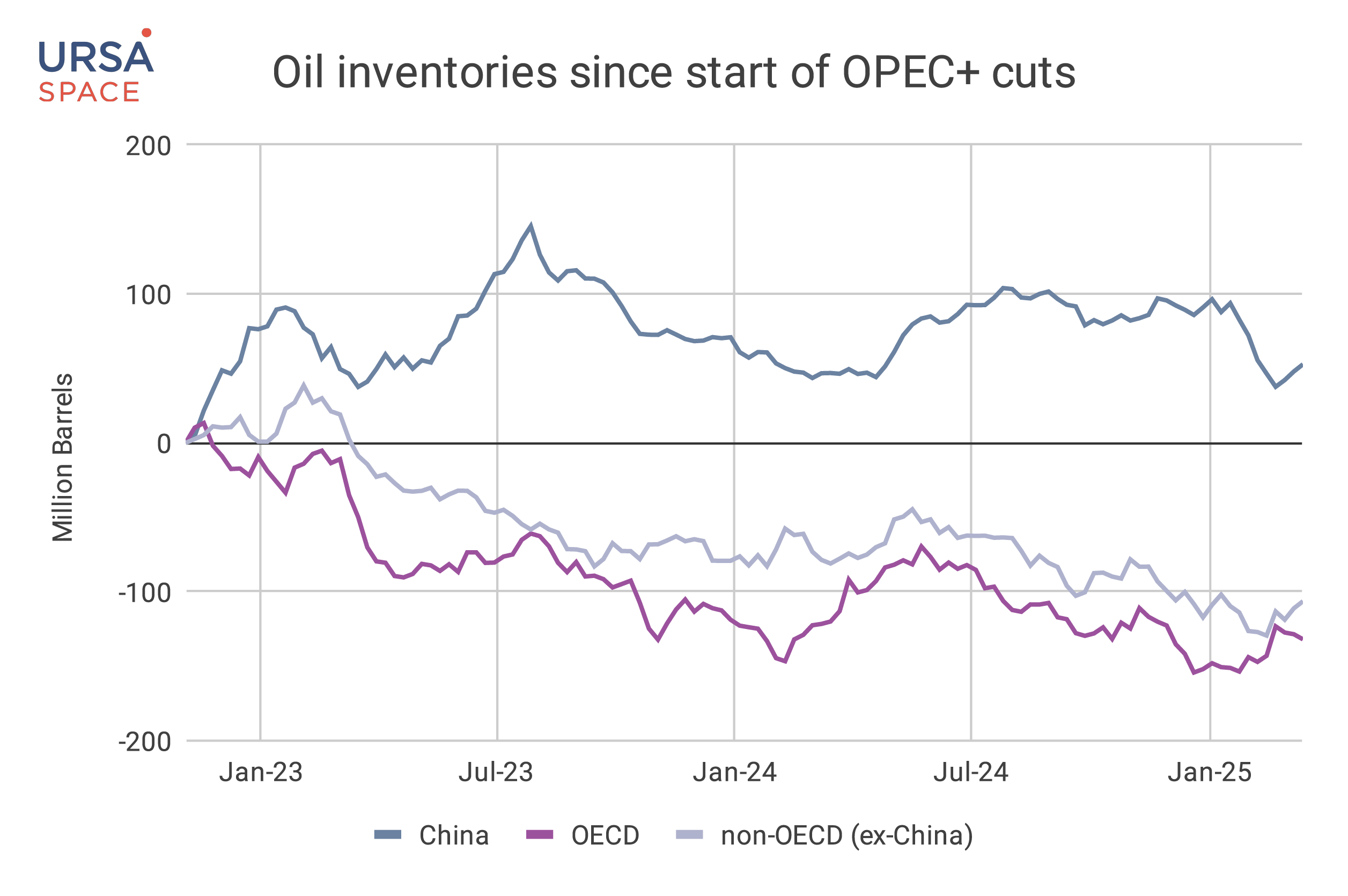
China imported an average of 11.3 million barrels per day in 2023—a record high—and 11.1 million b/d in 2024, contributing to inventory builds.
China’s refiners are often described as 'opportunistic buyers,' snapping up cargoes when market conditions are favorable and storing barrels as a kind of rainy day fund. Indeed, oil prices in 2023-24 were comfortably below the 2022 highs.
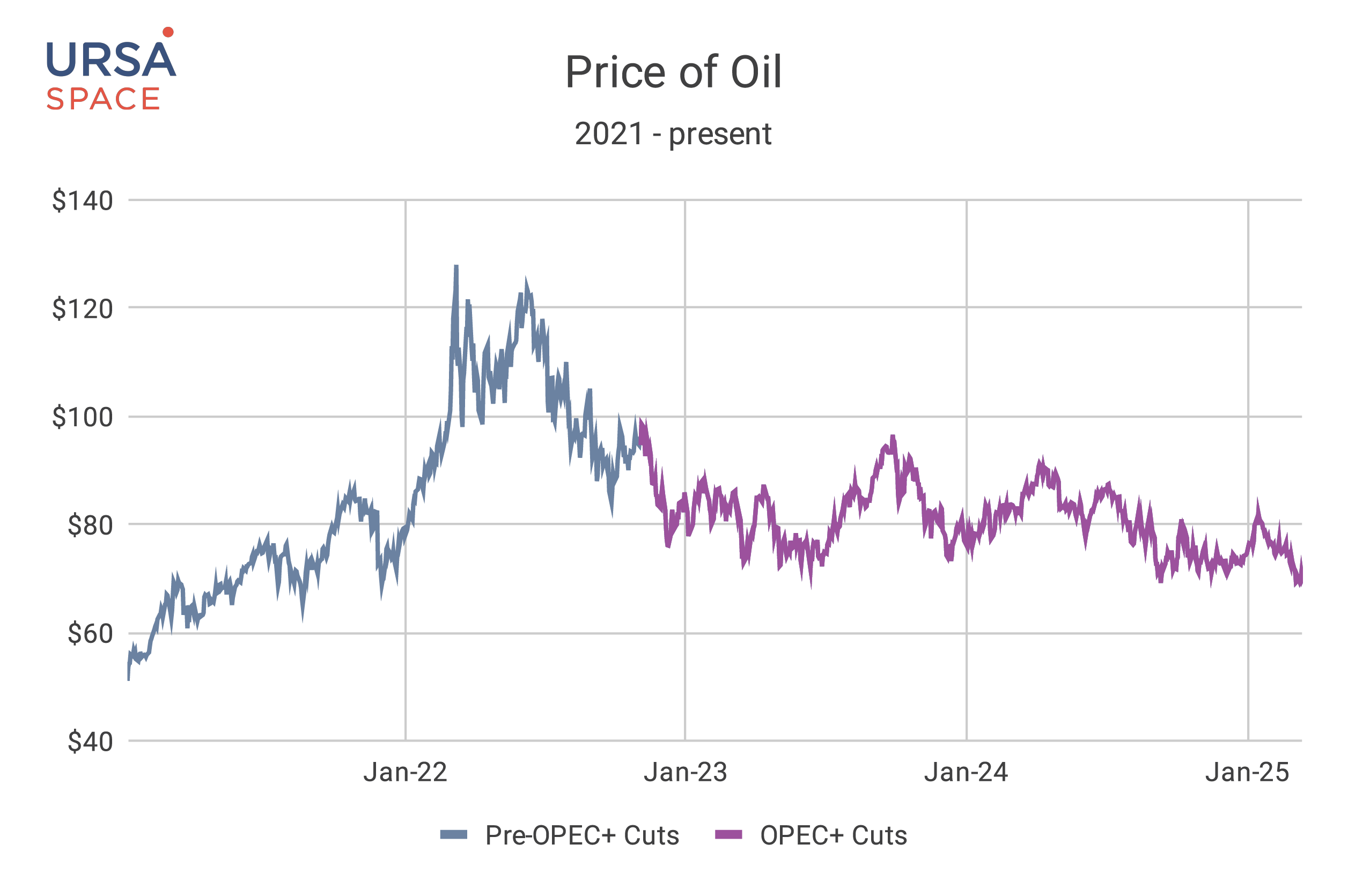
Another key factor is how weaker oil demand could drive down China’s oil imports and refinery runs in 2025, coinciding with increased supply—a combination that has reshaped the outlook and pushed oil prices to multi-year lows.
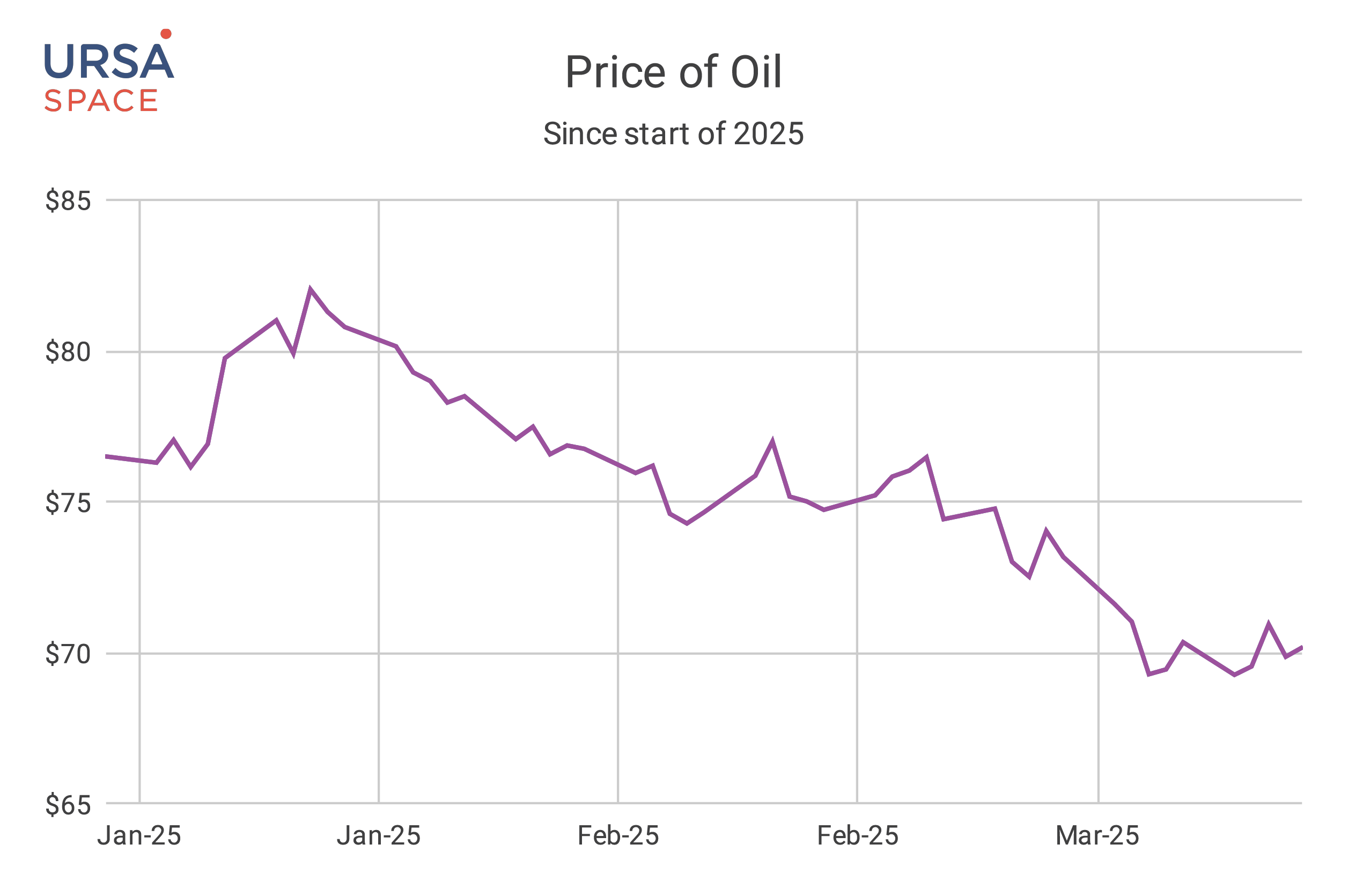
After trading above $80 per barrel in January, Brent crude futures—the global benchmark—fell below $70 per barrel in March. On March 5, Brent traded at $68.33/b, its lowest since December 2021 when prices were climbing during the post-COVID rally.
“Risks to the market outlook remain rife and uncertainties abound,” the International Energy Agency said in its latest monthly oil market report. “Our current balances suggest global oil supply may exceed demand by around 600 kb/d this year.”
Therefore, OPEC+’s early March announcement to increase output for the first time since 2022 surprised analysts, who had expected the group to maintain production curbs given the bearish market.
Others argued that the additional barrels were too few to make a significant impact.
“Overall, we see OPEC’s decision having minimal impact
the crude oil market’s balance,” ANZ Research’s Senior Commodity Strategist Daniel Haynes wrote in a note.
“Some members may struggle to produce at higher levels. And we expect greater compliance on compensation cuts,” he said.
Who will be proven correct?
Ursa Space data has not shown significant inventory builds recently. However, the focus is shifting to late 2025, making it crucial to monitor this data as the year progresses.
If you are interested in our global oil inventories product, we’d love to hear from you. Please reach out by filling out the form below.
Share article
